Frequently Asked Questions: Double Eyelid Surgery
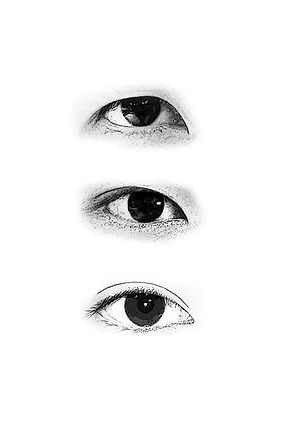
Q: What is the difference between single eyelids and double eyelids?
A: A single eyelid (monolid) has no upper eyelid crease, so the upper lid skin runs smoothly into the lashes, while a double eyelid has a clearly visible upper crease. Men and women with monolids may need different solutions depending on the amount of fat around the eyelid and each person's original eye structure.
Q: Does double eyelid surgery really make the eyes look bigger?
A: Double eyelid surgery only creates a new eyelid crease; it does not directly make the eyes look bigger. If you want your eyes to look rounder and more three-dimensional, this can be combined with correcting weak eyelid muscles (ptosis correction) or an inner corner (epicanthal fold) opening procedure.
Q: Is having excess eyelid skin different from having droopy eyelids (ptosis)?
A: These are two different problems. Excess eyelid skin means there is a large amount of fat/skin on the eyelid that sags and blocks vision, usually caused by genetics and aging. Droopy eyelids (ptosis), on the other hand, are caused by abnormal function of the eyelid-lifting muscle, which causes the upper lid to sag — and this often develops after a long-standing excess-skin problem.
Q: Which double eyelid shape looks the most beautiful and natural?
A: This depends on personal style preference and each individual's eye structure, which the doctor will assess together with the patient before surgery. The most natural-looking shape is usually the Korean-style double eyelid, because it creates a crease size that fits proportionally with the eye rather than being unnecessarily high.
Q: What is a "hooded" double eyelid, and how is it different from a monolid?
A: A hooded eyelid actually has a crease, but it is covered by loose skin or weak eyelid muscle, making the crease hard to see and causing it to look similar to a monolid. This differs from a true monolid, which has no crease at all.
Q: Before double eyelid surgery, is it necessary to have the eyelid muscles examined or the eyes assessed?
A: A pre-surgery assessment should always be done, especially for people with sleepy-looking eyes, droopy eyelids, or eyes that don't open fully. Double eyelid surgery involves the skin, fat, the eyelid-lifting muscle, and overall eye health, so an exam helps determine whether the eyelid issue is simply about the crease or also involves how the eyelid muscle functions, allowing the treatment plan to be tailored to each individual.
Q: Can people with dry eyes or uneven eyes still have double eyelid surgery?
A: Both cases can be assessed for surgery. For dry eyes, the severity of the condition and the health of the eye surface need to be considered first. For uneven eyes, the cause must be identified — whether it relates to the crease line, eyelid skin, eyebrow position, or the function of the eyelid-lifting muscle.
Q: What should I consider when choosing a clinic/doctor for double eyelid surgery?
A: You should check the facility's credentials, the doctor's qualifications and expertise (an ophthalmologist specializing in this area is recommended), the pre-surgery assessment process, the approach to choosing a technique suited to each person's eyes, as well as real before-and-after results and the aftercare system.
Q: Can older people still get double eyelid surgery?
A: Yes, in many cases. Age alone is not a contraindication, but older patients should be assessed for underlying health conditions, medications, dry eye, ptosis, and weak eyelid muscles before surgery, since they often have more lax eyelid skin and reduced tissue elasticity than younger people, requiring a more individualized treatment plan.
Q: Does double eyelid surgery hurt, and how long does the procedure take?
A: It does not hurt during the surgery itself, because the doctor injects local anesthesia beforehand — you will only feel slight pulling or pressure. Once the anesthesia wears off, there may be mild tightness or discomfort at the wound site, which can be managed with ordinary pain relievers. The procedure itself takes about 45-90 minutes on average; it is a minor surgery, and you can go home the same day without hospital admission.
Q: Where is the double eyelid surgery scar located, and will it be visible or leave a noticeable scar?
A: The incision is placed along the crease line of the upper eyelid. The doctor hides the incision within the crease itself, so once healed it is barely visible, especially when the eyes are open normally. The scar line may be more visible when the eyes are closed in the early period, but it gradually fades and blends in to look like a natural crease (silicone gel or laser treatment can help further reduce the mark once the wound has fully healed).
Q: How much does double eyelid surgery cost?
A: The cost depends on your examination: the type of surgery (non-incisional, small-incision or incisional, and whether ptosis correction or epicanthoplasty is also needed), whether it is a first surgery or a revision, one or both eyes, and your eyelid anatomy. The clinic gives you the cost after the doctor has examined you. Book via LINE @saonanon or call +66 90 946 3090.
Q: Does double eyelid surgery affect vision?
A: Generally it does not affect vision, since the surgery is limited to the outer eyelid skin. There may be mild blurriness or irritation right after the procedure, which resolves on its own. Choosing an experienced doctor keeps this risk very low.
Q: How many days of recovery are needed after double eyelid surgery, and what symptoms should I expect?
A: On the first day there will be swelling, redness, tightness of the eyelid, and possibly mild bruising — this is normal. The wound-healing recovery period takes about 7-14 days, with swelling and bruising being most visible in the first 2-3 days before gradually subsiding within 1-3 weeks. The final, natural-looking crease result usually settles in after about 1-3 months. You should avoid getting the wound wet for at least 5-10 days, or until the stitches are removed.
Q: When can I wear makeup after double eyelid surgery?
A: Light makeup can usually be worn about 3-7 days after stitch removal, but you should avoid applying cosmetics directly around the eye area until the wound has fully healed.
Q: How long does double eyelid surgery last, and is there a chance the crease will disappear and revert to a monolid?
A: With incisional techniques that reshape the eyelid structure, results tend to last a long time — many cases last 10 years or more — and reverting to the original monolid is difficult because the underlying structure has been permanently changed. With suture/non-incisional techniques, results generally last about 2-10 years, and there is a chance the sutures loosen over time, causing the crease to drop or fade.